
Hartford Dumpster Street Permit Requirements & Costs
Charter Oak Dumpsters helps Hartford, CT customers handle dumpster street permit requirements and costs with clear guidance and local scheduling support. In Downtown, Asylum Hill, and North East, placement rules can vary with tight streets, older pre-1920 properties, and winter weather that affects access and curb space. We explain current permit steps, fees, and placement restrictions so your rental stays compliant and on schedule.
Hartford's Dumpster Street Placement Rules
We've learned the hard way that Hartford's historic districts like Frog Hollow and Asylum Hill have strict rules about dumpster placement. Our crew always checks overhead clearance for tree limbs and wires before positioning. The city requires 4-foot sidewalk clearance minimum - we carry measuring tapes in every truck for this. For those tight downtown spots near Bushnell Park, we often recommend our 10-yard dumpsters that fit snug against buildings without blocking bike lanes. Last spring, we helped a client avoid $300 in fines by pre-marking their placement area with spray chalk to verify compliance.
Pre-Delivery Site Checklist
-
Check local street parking regulations before placing a dumpster
-
Obtain necessary permits from Hartford's Public Works Department
-
Place reflective safety markers around the dumpster after sunset
-
Schedule regular debris compaction to maximize container efficiency
-
Verify weight limits with our certified scales before transport
Hartford Street Permit Requirements for Dumpster Placement
- Submit application 10 business days prior to placement
- Include precise dumpster dimensions
- Obtain neighborhood association approval
- Mark proposed location with temporary survey stakes
Key Takeaway
Hartford street permits demand careful planning and documentation for temporary dumpster placement near historic districts.
Hartford Dumpster Street Permit Requirements & Costs
Street placement in Hartford usually involves two separate cost layers: the dumpster rental itself and the public-right-of-way permit tied to where the container sits. In dense blocks around Downtown, Frog Hollow, and Asylum Hill, curb space is limited and enforcement is tighter, especially near pre-1920 buildings, delivery lanes, and event traffic around Dunkin' Park. A permit often becomes the practical answer when a driveway is unavailable or the container would block a lane. Planning matters because permit approval, placement rules, reflective marking, and traffic control expectations can change the total cost quickly. Local crews also have to account for pavement condition, overhead clearance, snow storage, and access for commercial fleet moves. The ranges below reflect common Hartford street-use situations and the normal equipment sizes used for cleanouts, renovations, and heavy material loads.
| Specification | 10-Yard Dumpster | 20-Yard Dumpster | 30-Yard Dumpster | 40-Yard Dumpster |
|---|---|---|---|---|
| Street permit basics in Hartford | Required when a dumpster occupies public curb space or part of a travel lane. | $40-$120 permit fee | Downtown, Frog Hollow, and Asylum Hill usually face tighter curb-control checks. | dumpster access in Downtown, dumpster access in Frog Hollow, dumpster access in Asylum Hill |
| 10-yard dumpster on-street | Best for tight sites, light remodel debris, and small cleanouts near older storefronts. | $320-$520 rental | Compact footprint helps where sidewalks, hydrants, and loading zones limit placement. | 10-yard dumpster, compact-footprint equipment, driveway protection guide |
| 20-yard dumpster on-street | Common choice for roof tear-offs, basement cleanouts, and mid-size renovation debris. | $390-$640 rental | Often the best balance of capacity and curb space when a permit allows only one container. | 20-yard dumpster, avoiding overage fees, commercial fleet access |
| 30-yard dumpster on-street | Used for larger demolition loads, tenant turnover debris, and heavier renovation waste. | $470-$760 rental | Needs more clear frontage and more caution near traffic, parked cars, and utility boxes. | 30-yard dumpster, high-tonnage capacity, prohibited items list |
| 40-yard dumpster on-street | Reserved for major commercial cleanouts, large-scale demolition, and bulky disposal needs. | $620-$980 rental | Street placement becomes harder in older blocks with narrow lanes and limited turning room. | 40-yard dumpster, walk-in loading door, safety guide |
| Concrete disposal on a permit site | Used for slab, block, and heavy masonry where weight limits matter more than volume. | $450-$780 rental | Requires close attention to tonnage because overages happen fast with dense material. | concrete disposal, high-tonnage capacity, avoiding overage fees |
| Driveway protection for street drop-offs | Helpful when the container must pass over curbs, aprons, or patched pavement near older buildings. | $25-$85 protection add-on | Protects asphalt, concrete, and pavers from gouging during placement and pickup. | driveway protection, compact-footprint solution, safety guide |
| Permit handling in Downtown Hartford | Most sensitive area for curb use because of traffic, deliveries, and active business frontage. | $40-$120 permit fee | Expect stricter placement review near loading bays, bus paths, and event traffic corridors. | Downtown, service areas, local coordination |
| Permit handling in Frog Hollow | Dense residential and mixed-use blocks often leave no room for off-street placement. | $40-$120 permit fee | Crews usually plan around parked cars, narrow lanes, and limited turnaround space. | Frog Hollow, nearby neighborhood service, driveway protection |
| Permit handling in Asylum Hill | Historic building patterns create tighter frontage and more sidewalk conflicts. | $40-$120 permit fee | Containers often need careful staging to avoid blocking access doors and service alleys. | Asylum Hill, company background, jobsite resources |
| Permit timing for event-heavy streets | Near Dunkin' Park, scheduling has to avoid congestion, game-day traffic, and curb closures. | $40-$120 permit fee | Buffer space helps avoid ticketing, blocked deliveries, and missed pickup windows. | Downtown access, safety planning, site coordination |
| Overage fee exposure on street jobs | Heavier debris or mixed waste can push a container past its allowed tonnage. | $75-$180 overage charge | Best controlled by sorting loads early and keeping wet material out where possible. | overage-fee guide, prohibited items, 20-yard option |
| Commercial fleet access for street placement | Useful when the site needs a truck with tighter turning clearance and safer maneuvering. | $20-$60 access-related fee | Helps on narrow Hartford blocks where standard placement is difficult. | commercial fleet access, compact-footprint design, dumpster rentals |
| Safety and marking requirements | Permit jobs often need cones, reflective tape, and clear visibility after dark. | $15-$45 marking supplies | Important on older streets with poor lighting, angled parking, and narrow lanes. | safety guide, equipment features, jobsite guides |
| Permit and rental total for a basic street job | Most small Hartford curb setups land in a combined cost range. | $360-$760 total | Total depends on container size, street restrictions, and any added protection or overage risk. | private rental vs city pickup, roll-off vs bagster, rental vs junk removal |
Hartford Dumpster Street Permit Requirements and Costs
Obtain a city permit before placing dumpsters on Hartford streets.
Hartford Street Dumpster Permits, Costs, and What We Check Before Delivery
We treat a street dumpster in Hartford like a placement problem first and a hauling job second. If the container sits on public pavement, the city’s permit rules and the block layout matter just as much as the debris inside it. We’ve worked enough narrow streets, older properties, and winter-worn curb lines to know that a good setup saves headaches. We haul it away, so you don’t have to worry.
-
We check the street, not just the driveway
In Hartford, a dumpster sitting on the curb pulls in more than debris; it pulls in permit questions, traffic concerns, and neighbor complaints. We look at whether the container touches public pavement, blocks sightlines, or tightens flow on streets like those in North East, Frog Hollow, and Downtown. That first look matters because historic blocks and narrow lanes leave less room for mistakes, especially around pre-1920 buildings and busy commercial corners.Real World ExampleOn a tight Frog Hollow block, we placed a 20-yard unit where it stayed clear of the travel lane and kept the sidewalk open for foot traffic.
-
We plan around Hartford’s right-of-way rules
Street placement often means the city wants a permit before the dumpster lands. We work that into the job early because right-of-way issues get messier after delivery, especially near Downtown loading zones and older residential streets in North East. Our crew keeps the placement practical: enough access for loading, enough clearance for vehicles, and enough room to avoid blocking utilities, hydrants, or storm drains near the Connecticut River corridor.Real World ExampleFor a downtown renovation, we coordinated the drop so the container fit the block without cutting off curb access for adjacent tenants.
-
We match the dumpster to the job and the street
The wrong size causes more problems than it solves. A unit that’s too large crowds the roadway; one that’s too small fills early and forces a second move. We size for the debris, the lane width, and the building access, especially in Hartford’s older districts where pre-1920 footprints leave little buffer. Our compact-footprint options help when the street is tight and the job still needs reliable loading room.Real World ExampleNear a historic duplex in North East, we used a smaller container that fit the curb space and still handled the tear-out debris cleanly.
-
We keep the permit conversation practical and upfront
Permit costs and requirements vary with location, and that’s where people get tripped up. We’ve seen jobs stall because nobody checked whether the dumpster would sit on private property or public street space. We walk through that before delivery so the customer knows what the city is likely to expect. Brenda started Charter Oak Dumpsters after seeing how winter debris and tight Hartford sites create extra friction, and that experience still shapes how we set up each placement.Real World ExampleWhen a contractor in Downtown needed street access, we sorted the placement details before the truck rolled in so the load-out stayed on schedule.
Charter Oak Dumpsters will help you understand whether your Hartford placement needs a street permit, what affects the cost, and how we set the dumpster where it fits the block.
Dumpster Permit Mistakes That Cost Hartford Contractors
After 18 winters servicing Hartford, we've seen these permit and placement errors burn through budgets faster than a Nor'easter.
Assuming all Hartford neighborhoods have the same permit rules
The Consequence
The Fix
Ignoring pre-1920 building debris handling
The Consequence
The Fix
Overfilling dumpsters beyond marked lines
The Consequence
The Fix
Skipping driveway protection
The Consequence
The Fix
Assuming weekend drop-offs are fine
The Consequence
The Fix
Street permit questions in Hartford usually start with the placement, not the dumpster
When a dumpster has to sit on Hartford streets near older buildings, we slow the job down and look at the block before anything gets dropped. Around Asylum Hill, Frog Hollow, and North East, curb space gets tight fast, and a box on the road can mean a city permit, traffic concerns, or a scramble for the right spot. We’ve handled plenty of jobs like that since Brenda started Charter Oak Dumpsters in 2005, after winter cleanup and construction debris kept piling up around Hartford job sites. We haul it away, so you don’t have to worry. If you want to avoid street placement, we can talk through driveway protection in Hartford, compare private rental vs city pickup, and match the bin to the site with a 20-yard dumpster for Hartford cleanouts or a 10-yard dumpster for tighter driveways. For bigger commercial work, we also look at compact-footprint dumpster options that fit Hartford’s older streets better.
Placement Feasibility Checklist
-
[object Object]
-
[object Object]
-
[object Object]
-
[object Object]
| Situation | What we look at | Why it matters |
|---|---|---|
| Dumpster on the street | Permit needs, curb space, traffic flow | Hartford blocks can get tight fast, especially near pre-1920 buildings |
| Dumpster on private property | Driveway width, surface protection, truck access | Private placement often avoids street permit issues |
| Heavy debris loads | Weight, material type, disposal plan | Concrete and mixed demo debris need the right setup from the start |
Hartford Dumpster Street Permit FAQ
Hartford street permits depend on curb space, traffic, and old building access near Asylum Hill, Frog Hollow, and the Connecticut Convention Center.
Do I need a street permit for a dumpster in Hartford?
Who handles the permit in Hartford?
What affects street permit approval near older Hartford buildings?
How much do Hartford street permit fees cost?
What happens if the dumpster is placed without a permit?
What details do I need for the permit application?
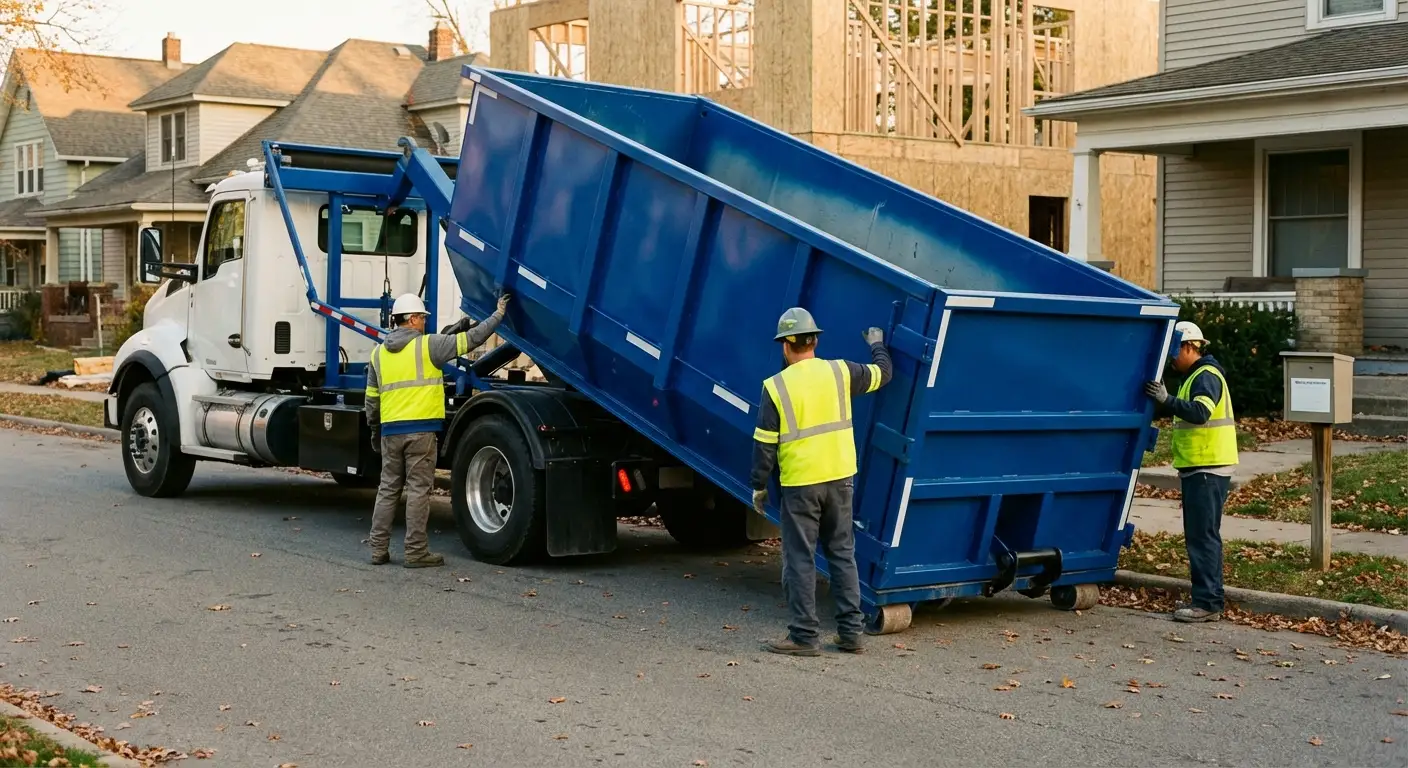
Hartford Dumpster Permit Rules Simplified
Learn Hartford's dumpster permit requirements for curbside placement. Avoid fines with proper documentation and approved locations.
Hartford-approved dumpster placements since 2018